“picking coffee fruit” search results (3000)

Barista course
Climate is the decisive factor for coffee cultivation. Coffee trees are only suitable for growing in the tropics or subtropics, so the zone between latitude 25 degrees south and north is generally called
2014-07-16 Coffee knowledge barista coffee training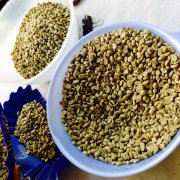
Correctly planting Coffee Tree Coffee Tree growth process Map
One of the characteristics of a coffee tree is that its fruit can bear fruit several times a year, and another is that flowers and fruits coexist at different stages of ripening. If the fruit is too ripe, the beans in it will rot. If the beans are not ripe, the beans will not ripen by themselves. So bean pickers often go through the same tree several times to find ripe fruit, but try their best.
2015-11-05 Right planting coffee growth process one of the traits that is it's
The fruit of coffee tree is picked. Introduction to the process of how to make coffee.
In the washing type, the harvested fruit is poured into the sink, the floating matter is removed, the fruit in the water is moved to the pulp removal machine, the outer skin and pulp are removed, and then put back into the tank to remove the floating matter, the core in the water is poured into the fermentation tank, soaked for half a day or one day, the colloid on the surface of fermented beans is removed, washed, dried or mechanically dried, and the endocarp is removed on the sheller to form commercial raw coffee beans.
2016-10-20 Coffee tree fruit really coffee beans how to make process introduction washing harvest
Introduction to the treatment process of raw coffee beans Coffee trees bear fruit several times a year
When the coffee berries are ripe, they are usually harvested by manual picking. In some places, only the fully ripe berries are picked, while others are all picked from a single branch. The former is called handpicked and the latter is called strip-picking. Because the ripening time of coffee berries is not consistent, the harvest is likely to be divided into several stages.
2016-07-11 Coffee raw beans treatment process introduction structure several times a year coffee berries
Introduction to the Coffee Flavor description characteristics of Nicaraguan Lemon Manor Coffee
Nicaragua is an economically backward agricultural country, is one of the poorest countries in Central America, the unemployment rate is very high, people live in poverty, and coffee is Nicaragua's pillar industry, producing nearly 100,000 tons of coffee beans every year. Due to the poor economic foundation, the coffee industry is still relatively backward, and coffee farmers are also in a relatively poor state. Although Nicaragua is a large part of Central America,
2016-10-09 Cocoa fragrance Nicaragua lemon tree manor coffee flavor description characteristics
Introduction to the characteristics of flavor and taste varieties of Honduran coffee beans in planting environment
The granules of coffee beans in Honduras are large in shape, uniform in size and glossy in color. In order to facilitate harvesting, farmers will prune the coffee trees to no more than 150 centimeters, because if they grow too high, they have to set up ladders to pick, which is not only time-consuming, but also may damage the trees by bending branches. As the ripening period of each fruit of the coffee bean is different, it is necessary to keep the coffee bean in good condition.
2016-10-19 Honduras coffee beans flavor taste variety characteristics planting environment grinding
Coffee cherries are made from beans.
If coffee farmers in order to save trouble, regardless of whether the coffee fruit ripe green red together will make coffee drink to death sour mouth, so fine coffee must pick mature red fruit. Distinguish between floating beans and sinking beans: coffee berries picked from coffee fields must not be mistaken and must be sent to the treatment plant on the same day. immature Ripe fruit retains ripe red fruit. simplest
2014-09-02 coffee knowledge coffee beans bean picking methods coffee bean processing
Introduction to Coffee trees
First, the planting and regional distribution of coffee trees. Botanically, coffee trees belong to the subgenus Rubiaceae, but coffee beans, commonly known as coffee beans, are actually the seeds of the fruit of coffee trees, just because they are shaped like beans, so they are called coffee beans. Climate is the decisive factor for coffee cultivation. Coffee trees are only suitable for growing in the tropics or subtropics, so the latitude between south and north is between 25 degrees.
2014-11-07 Coffee knowledge coffee common sense coffee tree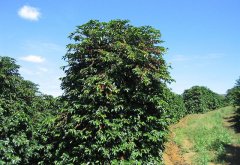
From coffee tree to coffee
Coffee is a perennial evergreen shrub or small tree of Rubiaceae. It is a horticultural perennial cash crop with the characteristics of fast growth, high yield, high value and wide market. Wild coffee trees can grow to a height of 5 to 10 meters, but coffee trees planted on the manor are often cut to less than 2 meters in order to increase their fruit and facilitate harvesting.
2014-07-22 Coffee knowledge coffee tree coffee process coffee encyclopedia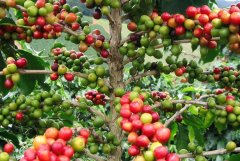
Nicaragua and lemon tree estate manual picking method Matagalpa production
Specialty coffee is also known as specialty coffee. It refers to coffee made from green beans with excellent taste characteristics grown in a few extremely ideal geographical environments. Depending on the particular soil and climatic conditions in which they are grown, they have outstanding flavors. This type of coffee is carefully selected and graded for its hard texture, rich taste and wind.
2016-06-28 Nicaragua lemon tree estate artificial picking method mataga erpa Ma
Brazil Cafes Do Brazil (part two)
Coffee varieties Arabica and Robusta are produced, of which Arabica accounts for 70% to 80%. In Arabica coffee, the more common varieties are Modo Novo, Catuai, Bourbon, Maragoripe and so on. Coffee harvest can have three or four harvest seasons in a year. Mechanical picking is very common. The method of picking is very different from that of other boutique countries. Mechanical picking process
2014-09-03 Brazil
Description of Cuban Crystal Mountain Coffee Flavor introduces the characteristics of Cuba's Top Coffee Manor
In Cuba, most of the coffee beans are picked by hand. Coffee beans are picked about every half a month during the ripening period. During or after picking, coffee beans are classified and those immature and bad beans are removed to ensure the quality of the coffee. Cubans usually deal with coffee beans in two ways: sun exposure and water washing. Sunbathing is the easiest,
2016-09-19 Cuba Crystal Mountain Coffee Flavor description introduction Top Manor producing area characteristics
The study of fine coffee teaches you to plant coffee trees correctly.
One of the characteristics of a coffee tree is that its fruit can bear fruit several times a year, and another is that flowers and fruits coexist at different stages of ripening. If the fruit is too ripe, the beans in it will rot. If the beans are not ripe, the beans will not ripen by themselves. So bean pickers often go through the same tree several times to find ripe fruit, but try their best.
2014-10-16 Coffee knowledge boutique coffee science coffee tree planting
Grade planning of coffee beans in Kenya
Common classification: hand-picked coffee fruit, picked by hand, picked out immature fruit (unripe), overripe fruit (overripe) and other defects, peeled, after about 36 hours of fermentation, placed on a metal grid for sun drying, in the processing plant to remove the seed shell (parchment), become a blue-green appearance of attractive Kenyan raw beans. These beautiful raw beans, according to one
2016-06-06 Kenya coffee beans grades planning common classification manual picking coffee classics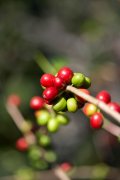
Ethiopian Coffee African Flavor
. Ethiopian fine coffee beans are best harvested manually. That is, only ripe coffee fruits are picked to prevent coffee fruits with inconsistent maturity from being picked at the same time. Fine coffee requires frequent and careful hand picking during harvest because underripe and overripe fruits affect the balance and stability of coffee flavor. Ethiopia is
2016-05-23 Ethel Bissau Coffee African Flavor Ethiopian Fine
Rwanda Coffee Flavor introduction to Rwanda Coffee producing areas
The coffee fruit needs to be transported to the processing plant as soon as possible after picking, but due to the lack of domestic facilities, it is unable to deal with the fruit at the first time. The fruits are piled up after being picked, which will continue to develop and accelerate mildew and decay due to lack of ventilation. Rotten fruits will affect the quality of coffee and show defective flavor. In recent years, the production and processing of coffee in Rwanda are
2016-07-27 Luwang Daqi Mayer Manor Rwanda Coffee Flavor introduction producing area
Introduction to Coffee Tree
The planting and regional distribution of coffee trees, coffee trees belong to the evergreen trees of the subgenus Rubiaceae in botany, while coffee beans, commonly known as coffee beans, are actually the seeds of the fruit of coffee trees, just because they are shaped like beans, so they are called coffee beans.
2014-06-09 Coffee knowledge coffee encyclopedia coffee tree
Introduction to the basic knowledge of Fine Coffee
First, the planting and regional distribution of coffee trees. Botanically, coffee trees belong to the subgenus Rubiaceae, but coffee beans, commonly known as coffee beans, are actually the seeds of the fruit of coffee trees, just because they are shaped like beans, so they are called coffee beans. Climate is the decisive factor for coffee cultivation. Coffee trees are only suitable for growing in the tropics or subtropics, so the latitude between south and north is between 25 degrees.
2015-04-22 Boutique coffee basics common sense introduction planting region distribution botany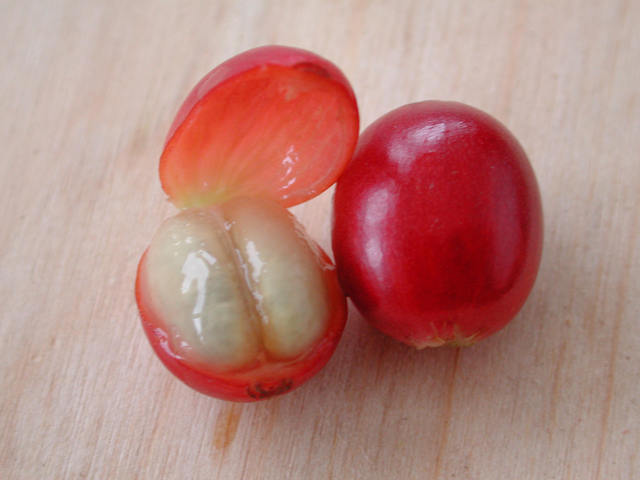
The treatment process from Coffee Fruit to Coffee Raw beans after picking Coffee Fruit
There are a pair of oval seeds in the center of the coffee fruit, which are covered with outer skin, endocarp and pulp. Ripe fruits rot in a short period of time without treatment, so the purpose of refining is to preserve coffee beans for a long time so that they can be stored and circulated. Refining is to remove the skin and pulp of the coffee fruit, and then take out the seeds. The general methods of refining are drying, washing, and
2016-01-16 Coffee fruit picking raw beans treatment process drying sun drying coffee
Yemeni and Ethiopian fine coffee
The best way to harvest high-quality coffee beans is to harvest them manually. That is, only mature coffee fruits are picked to prevent coffee fruits with inconsistent maturity from being picked at the same time. Because those unripe and overripe fruits will affect the balance and stability of coffee taste, boutique coffee needs to be picked frequently and carefully during harvest. Ocha Mattari: Yemen and Ethiopia
2016-05-24 Yemen Esso Biya boutique coffee coffee beans harvest way best